
How AI Is Transforming Prostate MRI Analysis
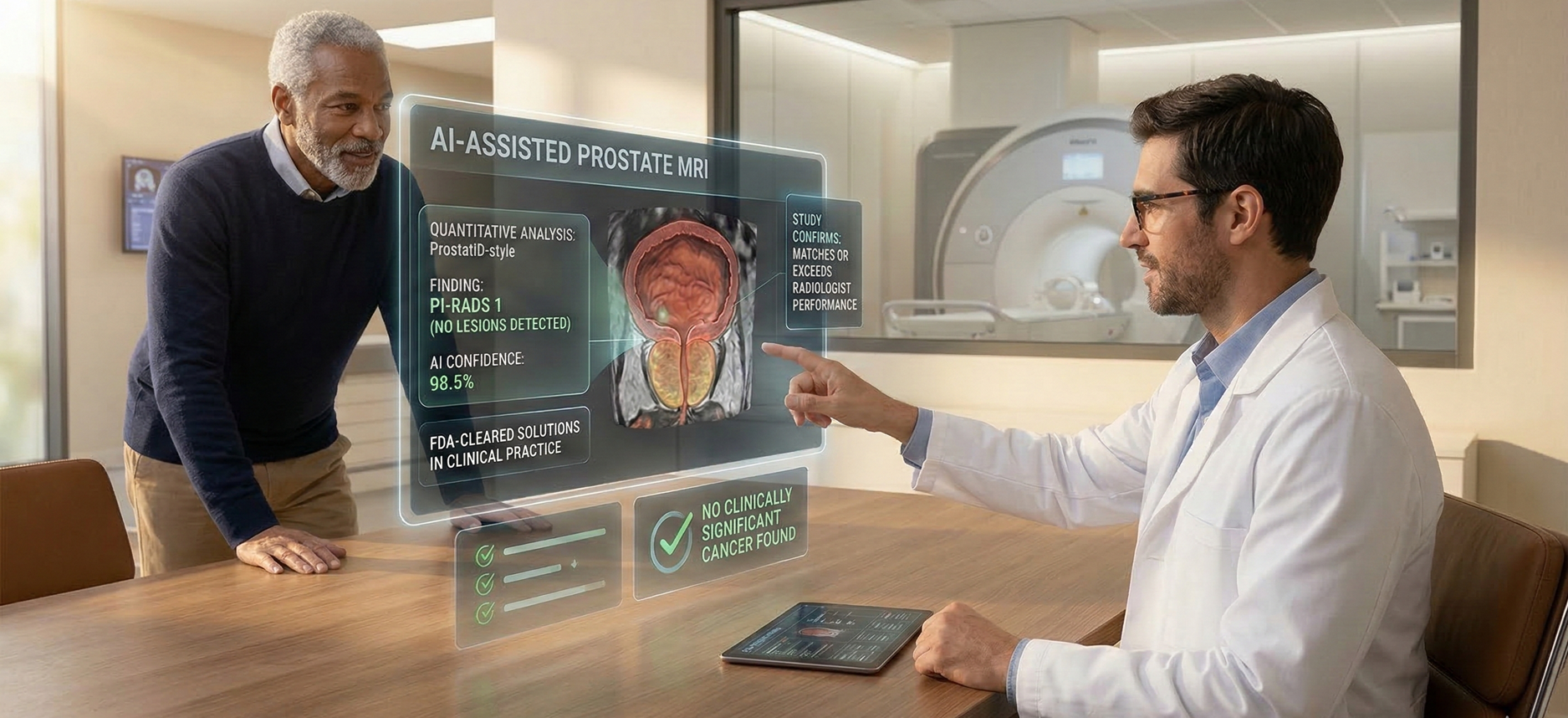
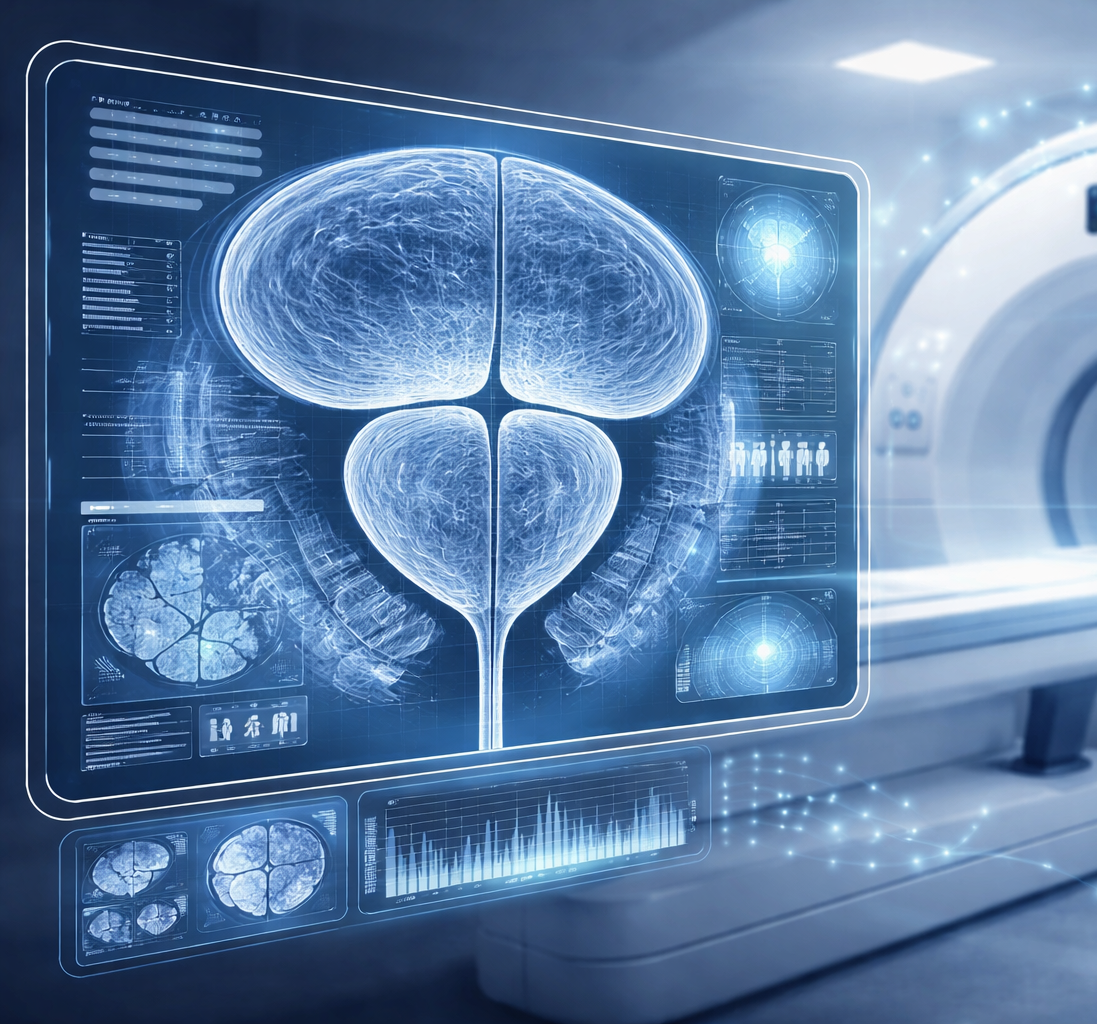
Artificial intelligence is rapidly changing how prostate MRIs are interpreted, with FDA-cleared solutions now in clinical use across the United States and Europe. These tools are demonstrating the ability to match or exceed radiologist performance while helping close the expertise gap that leaves some patients at a disadvantage.
FDA-Cleared AI Solutions in Clinical Practice
Several AI-powered tools have received FDA 510(k) clearance for prostate MRI analysis:
Bot Image's ProstatID* received its initial clearance in June 2022 for detection and diagnosis, with subsequent expanded clearances covering prostate cancer screening and biparametric MRI—creating a trifecta of clearances for detection, diagnosis, and screening. ProstatID uses machine learning trained on thousands of MRI datasets, radiological interpretations, guided biopsies, and pathology results to identify suspicious lesions, assign cancer probability scores, suggest PI-RADS ratings, and generate 3D prostate volume renderings. It works with major MRI platforms (Philips, GE, Siemens), at both 3T and 1.5T field strengths, and achieved CE certification under the EU Medical Device Regulation in October 2025.
Other FDA-cleared solutions include Ezra's prostate segmentation AI (cleared October 2020), Quantib Prostate (initially cleared 2020, version 3.0 cleared May 2023), and Quibim QP-Prostate (cleared 2021). In Europe, Lucida Medical's Prostate Intelligence received CE marking in October 2023.
* DeepView Imaging uses ProstatID, making this AI solution available direct-to-consumers.
The PI-CAI Study: Largest International Comparison
Published in "The Lancet Oncology" in 2024, the PI-CAI study is the largest international comparison of AI versus radiologists for prostate MRI. Analyzing 10,207 MRI examinations from 9,129 patients across 45 centers in 20 countries, the study found:
- AI achieved an AUC of 0.91 compared to 0.86 forradiologists—a statistically significant superiority.
- AI produced approximately 50% fewer false positives than radiologists.
- AI detected 7% more clinically significant cancers while flagging 20% fewer low-grade cancers that contribute to overdiagnosis.
Real-World Performance: 2025 Meta-Analysis
A systematic review published in Nature's Prostate Cancer and Prostatic Diseases, pooling 29studies with 7,398 patients, confirmed these findings in the real-world setting of AI as an assistant to human readers:
- AI-assisted interpretation achieved sensitivity of86.5% versus 82.6% for unaided radiologists
- Improvements across specificity, positive predictive value, and negative predictive value—all statistically significant
- Critically, readers of all experience levels improved their performance with AI assistance
Perhaps the most promising finding for expanding access to high-quality interpretation comes from recent studies showing AI can elevate less-experienced radiologists to expert-level performance:
PROSA Trial (2025): In a study of 499 biparametric MRIs, an AI-assisted less-experienced reader achieved the highest overall performance of any reading condition—surpassing even the expert radiologist reading alone—with sensitivity of 76.5%, specificity of 97.2%, and AUC of 0.969.
ProAI Study (2025): Testing AI across nearly 8,000 examinations and 6 centers, this study demonstrated that AI assistance increased radiologist accuracy from 0.80 to 0.86 while reducing reading time by 33%—from an average of 73 seconds to 49 seconds per case.
Italian Multicenter Study: AI boosted resident radiologists' sensitivity for significant cancer from 68.7% to 78.1%.
A separate study found AI improved nonexpert accuracy from 55% to 65%, narrowing the gap with experts who achieved 79%.
AI assistance provides additional benefits beyond raw accuracy:
- Improved inter-reader agreement: AI assistance boosted agreement between readers from a kappa of 0.64 to 0.84.
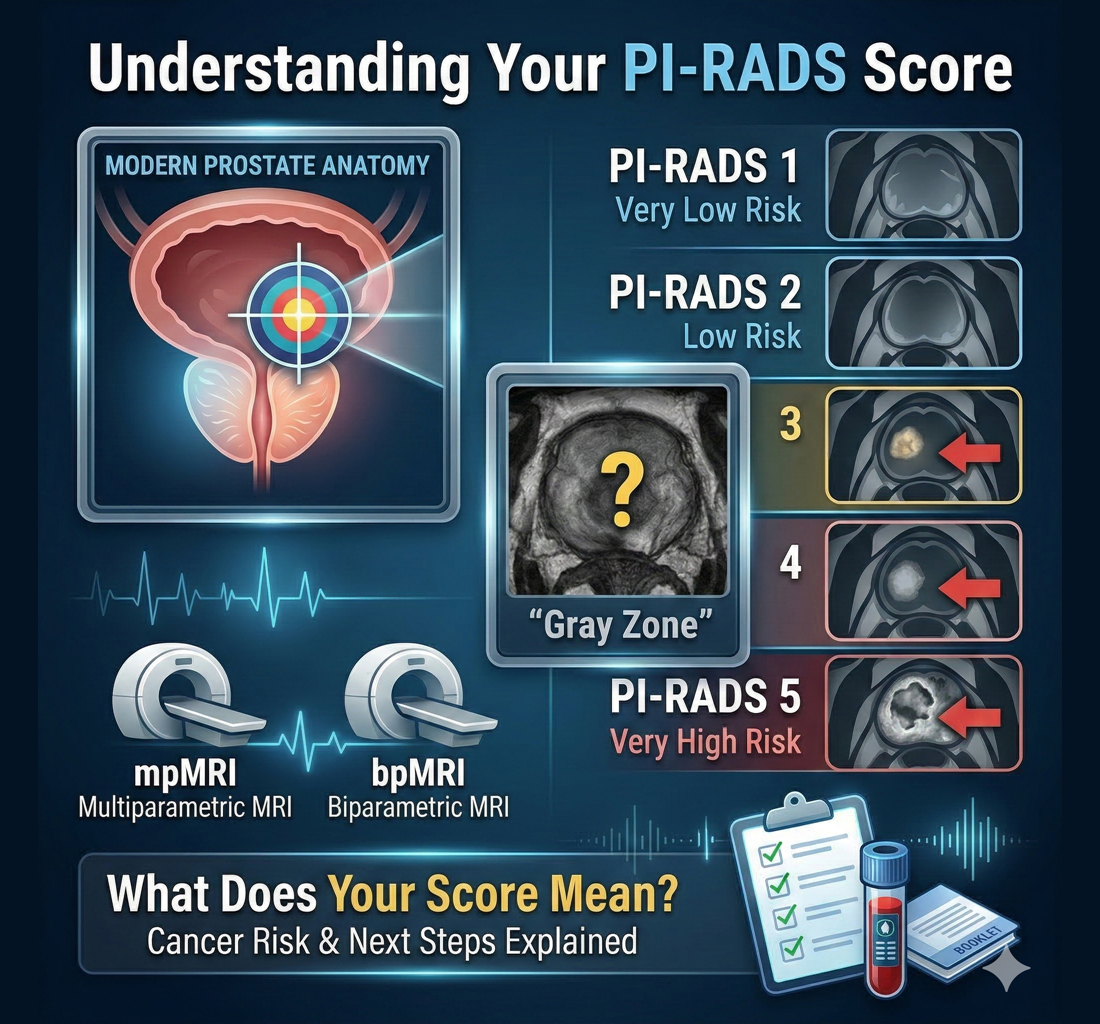
- Fewer equivocal readings: AI reduced the number of ambiguous PI-RADS 3 cases from 77 to 53 in one study—directly addressing the category where disagreement causes the most clinical confusion.
- Reduced workload: The ProAI study showed a 32% reduction in overall radiology workload in prospective implementation.
The European Society of Urogenital Radiology (ESUR) published a formal position paper stating that AI developments are "essential to successful community-wide, MRI-driven prostate cancer diagnosis." The paper outlined specific priorities: AI should maintain consistently high negative predictive values, increase detection consistency for significant cancers, improve discrimination for equivocal PI-RADS 3 cases, and enhance radiologist productivity.
Under the EU Medical Device Regulation (2017/745), prostate MRI AI tools are classified as Class IIb medical devices, requiring rigorous notified body assessment before receiving CE marking. The EU has also invested substantially in AI prostate imaging research through the Horizon 2020 ProCAncer-I project, which funded the PI-CAI challenge.
AI-enhanced MRI interpretation offers several potential benefits:
- More consistent readings regardless of which radiologist interprets your scan
- Reduced risk of false positives that lead to unnecessary biopsies
- Improved detection of clinically significant cancers
- Greater confidence in negative results
- Access to expert-level interpretation quality even at community imaging centers
As AI tools continue to be validated and adopted, they represent an important step toward ensuring every man receives the same high standard of prostate MRI interpretation, regardless of geography or access to subspecialist radiologists.
Sources: PI-CAI Study (Lancet Oncology 2024), Nature Meta-Analysis (2025), PROSA Trial (European Radiology 2025), ProAI Study (Nature Communications 2025), ESUR Position Paper, FDA 510(k) Clearance Records
More Articles

.svg)

