
Our Story
Dr. Randall W. Jones, a USAF Cold War veteran turned medical device inventor and entrepreneur, has spent decades advancing MRI technology.
He founded ScanMed and grew it into the world’s largest independent MRI coil company, secured numerous patents, and later pioneered FDA-cleared AI applications in prostate imaging.
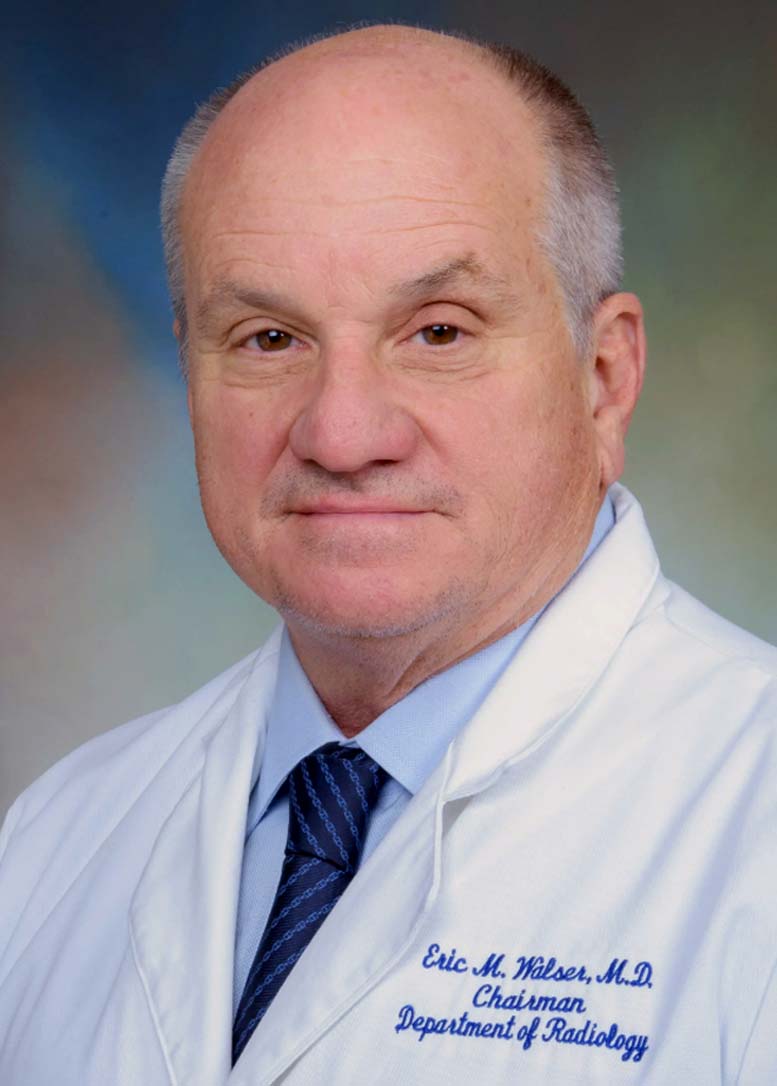
Alongside him, Dr. Eric Walser, Chairman and Professor of Radiology at the University of Texas Medical Branch and a nationally recognized expert in prostate MRI and interventional treatment, has dedicated his career to diagnosing and treating prostate cancer at the highest levels of clinical care.
Together, they shared a simple but powerful question:
Could prostate MRI reveal more than we were consistently seeing?


Our Purpose


Our Leadership Team

- Managing Partner & MRI Physics Advisor
.svg)
- Partner and Radiologic Interventionalist Advisor


- Managing Partner
Our Technology
ProstatID® is a radiological AI-powered detection (CADe) and diagnostic (CADx) software-only solution for use in a healthcare facility or hospital to assist trained radiologists and clinical specialists in the detection, assessment and characterization of lesions suspicious for cancer based upon the interpretation of MRI image data. ProstatID has been trained on thousands of MRI images and associated histopathology data from accurately localized biopsies yielding an industry-leading 93.6% area under the sensitivity-specificity curve (AUC). In summary, ProstatID is highly effective at distinguishing cancer from other anomalies and locating the cancer and its extent within the prostate.
Why Get a Second Opinion?
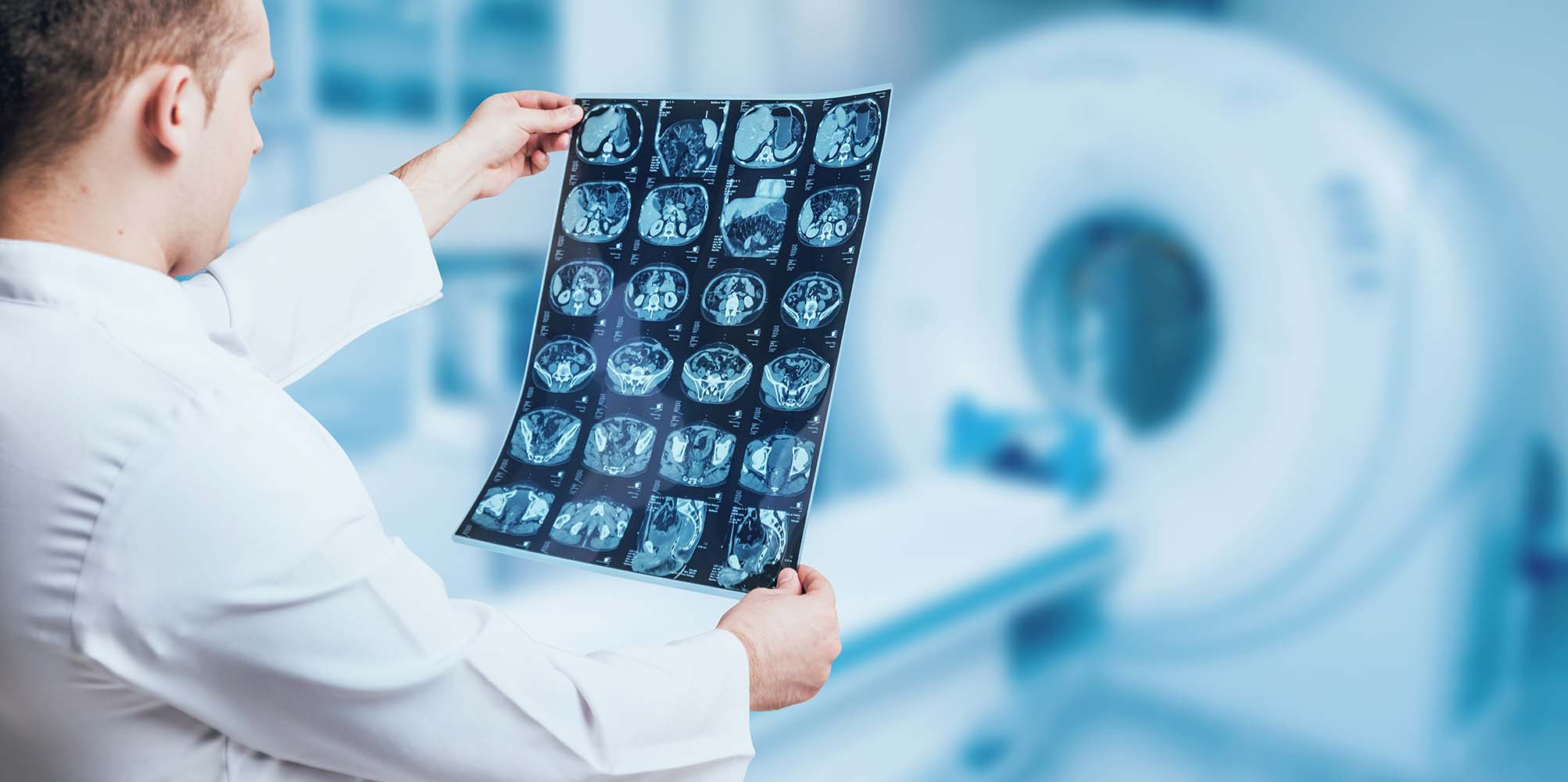
Your MRI may contain subtle findings—small lesions, borderline scores, or areas that warrant closer review—that benefit from a second look. A focused re-analysis can confirm findings, clarify ambiguous areas, and give you greater confidence before making treatment decisions.
Second opinions are standard in cancer care. They're not about questioning your doctor—they're about ensuring your decisions are based on the most complete picture possible.


Voices from Patients and Care Teams
Frequently Asked Questions
.svg)
.svg)
If you've had an MRI of your prostate, you can request a copy from your imaging center and upload it to our system analysis by our AI software. We'll provide a report back, with color overlays within approximately 30 minutes of submission.
DeepView Imaging is a medical image interpretation service specializing in prostate cancer screening, detection, and diagnosis utilizing ProstatID(TM) AI software. We provide expert analysis of prostate MRI scans to help care teams make informed decisions about patient care.
* DeepView Imaging was formerly Precision Prostate Consulting
Yes. DeepView Imaging's AI-assisted analysis is designed to evaluate MRI images for patterns associated with clinically significant prostate cancer, including areas that may evolve gradually. When scans are reviewed at different time points, the goal is not only to identify obvious new lesions, but to detect subtle progression that may not immediately stand out.
MRI interpretations can vary. A second opinion may confirm the findings or identify something missed, giving you and your care team more confidence.
Prostate MRIs are among the most complex medical images to interpret, and studies show significant variability between readers. Research found that initial and second-opinion reports disagreed in 30% of cases—and in 86% of those disagreements, the second opinion was proven correct by surgical pathology. PubMed Central
A second opinion can:
- Detect missed cancers that require treatment
- Downgrade false positives and help you avoid unnecessary biopsies
- Improve staging accuracy to guide the right treatment plan
Conditions like benign prostatic hyperplasia, enlarged prostate, and prostatitis can often be mistaken for cancer. A second opinion can help rule out these conditions before proceeding with treatment. Docpanel
Our AI-assisted analysis has shown significant diagnostic accuracy with an AUC1 score of 93.6%
1. AUC - Area Under the ROC (sensitivity-specificity) Curve
It depends on the treatment—and importantly, when your MRI was taken.
Timing Matters
Treatment can temporarily change how prostate tissue appears on imaging, so your body needs time to heal before a new MRI will be useful.
The efficacy of our AI solution has been clinically validated pre-treatment, however, for post-treatment it is still under review and not yet clinically validated. With this in mind, we recommend the waiting periods below before obtaining your next MRI for analysis.
Treatments Under Review
If you've had one of these treatments, we recommend waiting at least 90 days before your MRI.
- Focal laser ablation
- Focal cryoablation
If you've had one of these treatments, we recommend waiting at least 120 days before your MRI.
- Radiation therapy
- Hormone therapy
- Chemotherapy
- Immunotherapy
When in Doubt
These guidelines are based on our current understanding; your physician can help you decide if and when it is appropriate for your situation and decide whether the results should be taken into consideration.
Yes. Reports are structured to support longitudinal review. That means each scan is analyzed using consistent criteria so you and your physician can compare findings over time in a clear and standardized way. Structured reporting reduces ambiguity and helps focus discussions on what has changed — and what has not.
ProstatID™ is North America's first and only FDA-Cleared AI software for the Screening, Detection (CADe) and Diagnosis (CADx) of Prostate Cancer. It received FDA clearance on June 23, 2022 and is now used as the benchmark against which the FDA evaluates other prostate AI solutions.
Why trust it?
- Proven accuracy: With 93.6% sensitivity-specificity (AUROC), physicians can reliably detect and diagnose prostate cancer with far less interpretation time, higher confidence, and significantly improved positive detection rates while decreasing false positives.
- Rigorous clinical validation: Bot Image conducted two clinical studies involving 25 physicians and 300 prostate MRI cases over two years. The results exceeded the FDA threshold, demonstrating statistically significant improvement in reader performance.
- Trained on real outcomes: The program was trained using thousands of digital images, radiologist interpretations, and biopsy results.
- Works across MRI systems: Whether it is a Philips, GE, or Siemens (1.5T or 3.0T) MRI, ProstatID can process prostate MRIs. It doesn't require the same image quality as an interpreting physician.
- Trusted by specialists: "ProstatID allows three-dimensional view of the relevant findings synthesized from the hundreds of images obtained during multiparametric prostate MRI," noted Dr. Eric Walser, Chairman of Radiology at UT Medical Branch.
ProstatID has proven in clinical studies to not only reduce the number of false positives but also increase the number of early cancer detections.
ProstatID has also been CE-Marked (EU) and UKCA-Certified (UK).
More information about ProstatID
No, contrast is not required. Our AI software works with a standard non-contrast MRI of the prostate, commonly called a bpMRI (Biparametric MRI).
If you already have a contrast-enhanced MRI (called an mpMRI or Multiparametric MRI), that works too. The mpMRI contains both contrast and non-contrast image sequences—our AI simply uses the non-contrast sequences that are already part of your study.
In short: We can analyze either type of prostate MRI, as long as it meets our acquisition parameters.
Unfortunately, health insurance and Medicare do not currently cover this service.
However, you may submit this to your HSA (Health Savings Account) for reimbursement.
No, a referral is not needed to use this service.
All you need is a copy of your MRI, which you can request from your doctor or imaging center.
$249 (USD) * - for the first MRI analysis
$149 (USD) - for subsequent MRI analyses
This includes a diagnostic report (PDF) and colorized overlays on the original MRI input image series (DICOM files). The results can be shared freely with your care team.
Payment is only collected if the MRI is processed successfully. If the MRI cannot be processed for any reason (e.g. it falls outside our acquisition parameters), payment will not be collected.
* Financial Assistance is available - see: Financial Assistance
No. This is an adjunct tool that provides an additional datapoint.
Reports are designed to be clear and should be reviewed with physicians.
No. It provides AI-generated analysis only and is intended to be used as another data point when determining a treatment plan.
No. Supports both bpMRI (non-contrast) and mpMRI (contrast)
The AI solution only requires the following non-contrast sequences, which are part of a bpMRI and typically included with an mpMRI.
- T2-weighed (T2W)
- Diffusion-weighted imaging (DWI)
ProstatID™ is trained and validated on GE, Siemens, and Philips (1.5T or 3.0T) platforms, with additional systems in development.
DeepView Imaging and ProstatID are fully HIPAA-compliant.
As a supplemental input similar to a second read or second opinion.
Contact Bot Image to receive a demo, details on integrating with your PACS platform, and potential interpretation reimbursement for 3D reconstruction output. ProstatID meets the requirements to utilize CPT reimbursement code for its 3D output.
For PCs running Microsoft Windows, we recommend: MicroDicom - MicroDicom - Free DICOM viewer and software
For MAC OS:
- You can run MicroDicom in Wine - How to install MicroDicom DICOM Viewer on macOS? | MicroDicom DICOM Viewer
- WEASIS (opensource/free version) - Download Weasis DICOM Viewer :: Weasis Documentation
- Horos - Download Horos - Horos Project

