
Why MRI Before Biopsy Changes Everything
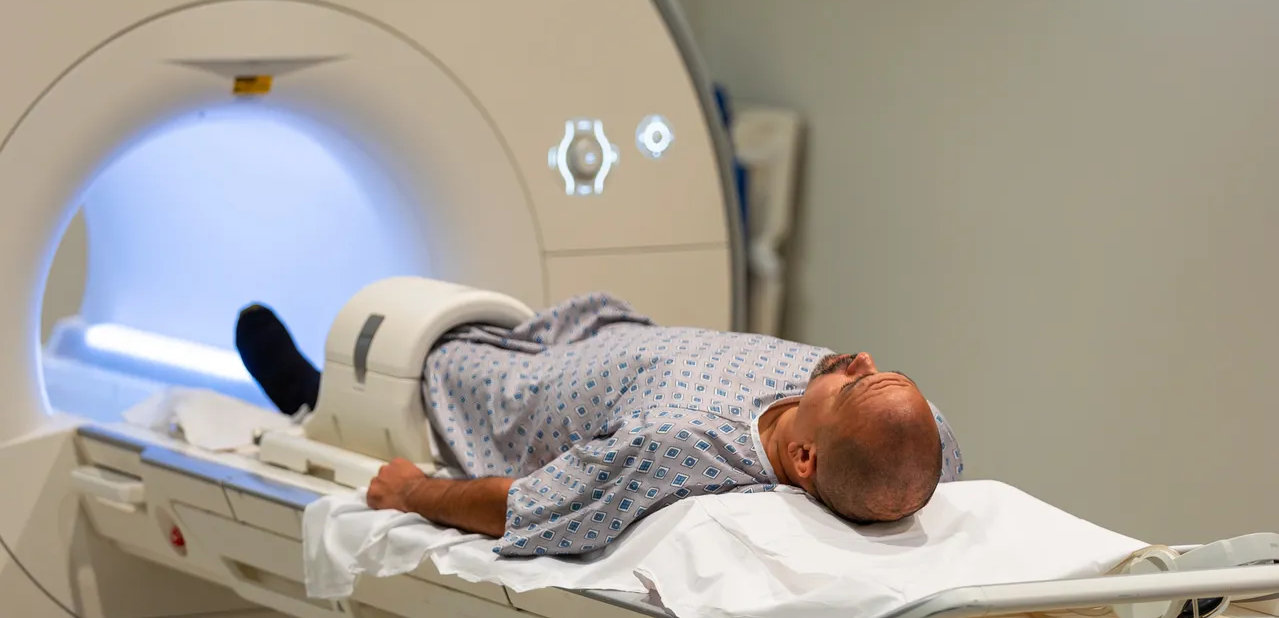
For decades, the path from an elevated PSA test to prostate cancer diagnosis followed a predictable sequence: blood test shows elevated PSA, doctor recommends biopsy, patient undergoes an invasive 12-needle procedure. This approach saved lives, but it also subjected millions of men to unnecessary biopsies and diagnosed countless slow-growing cancers that would never have caused harm.
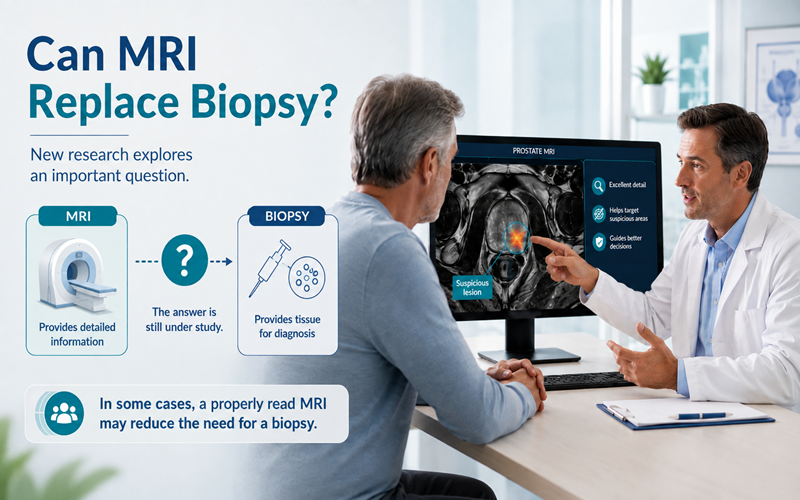
Today, that paradigm has fundamentally shifted. Pre-biopsy MRI is now endorsed by every major urology guideline worldwide, supported by landmark clinical trials, and increasingly recognized as the standard of care. The evidence shows this approach detects more dangerous cancers while sparing up to half of men from procedures they never needed.
The Limitations of PSA Testing Alone
The prostate-specific antigen (PSA) blood test has been the frontline screening tool for over three decades, but it has a fundamental limitation: PSA is prostate-specific, not cancer-specific. Benign conditions like an enlarged prostate (BPH), prostatitis, urinary infections, and even vigorous exercise can elevate PSA levels.
The consequences of this imprecision are significant:
- Only about 25% of men who undergo biopsy because of an elevated PSA actually have prostate cancer. Three out of four men endure an invasive needle biopsy for what turns out to be a false alarm.
- PSA misses roughly 15% of cancers entirely. In the landmark Prostate Cancer Prevention Trial, 15.2% of men with" normal" PSA levels below 4.0 ng/mL were found to harbor prostate cancer on biopsy.
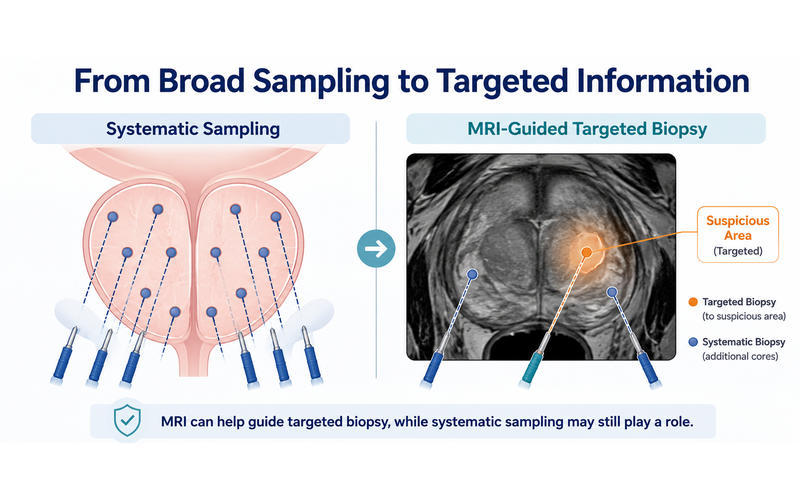
- Traditional 12-core TRUS biopsy samples the prostate blindly, missing 20–30% of clinically significant cancers while frequently detecting clinically insignificant ones.
An estimated 23–50% of screen-detected prostate cancers are so slow-growing they would never cause symptoms or death. Yet historically, more than 90% of these men received aggressive treatment with significant side effects, including urinary incontinence and erectile dysfunction.
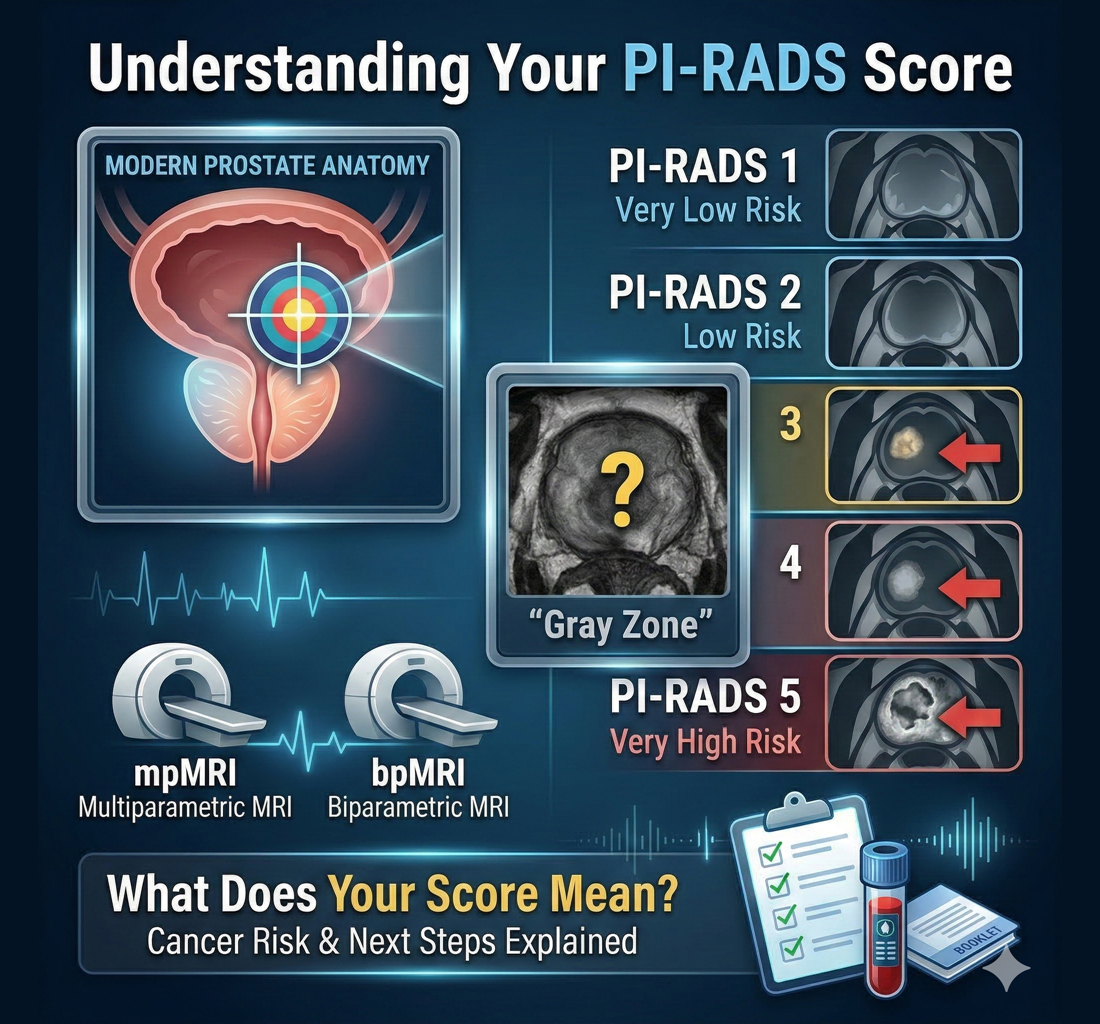
This is the gap that MRI was designed to close: finding the cancers that matter while avoiding the detection of indolent tumors that lead to unnecessary treatment.
The PRECISION Trial (2018)
Published in the New England Journal of Medicine, this international randomized trial enrolled 500 men across 25 centers in 11 countries. Half received MRI followed by targeted biopsy; half received standard 12-core TRUS biopsy.
The results were decisive:
- Higher detection of dangerous cancers: The MRI pathway detected clinically significant cancer (Gleason grade group ≥2) in 38%of men, compared to 26% with standard biopsy—a 12-percentage-point improvement.
- Lower overdiagnosis: MRI diagnosed clinically insignificant (Gleason 6) cancer in just 9% versus 22%—cutting overdiagnosis by more than half.
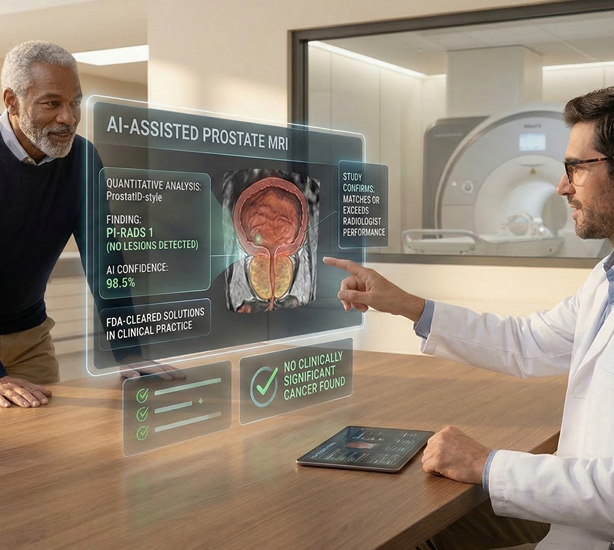
- Fewer unnecessary biopsies: 28% of men in the MRI arm had a negative scan and avoided biopsy entirely, with no increase in missed aggressive cancers.
- Less invasive procedures: Men who did undergo targeted biopsy needed a median of just 4 cores compared to 12.
Confirming Evidence from Other Major Trials
- PROMIS Trial (UK, 576 men): Established that MRIhas 93% sensitivity for clinically significant cancer—nearly double the 48%sensitivity of TRUS biopsy—with a negative predictive value of 89%.
- 4M Study (Netherlands, 626 men): Showed that 49%of men could safely avoid biopsy based on negative MRI, while only 3–4% of those men had significant cancer missed.
- GÖTEBORG-2 Trial (Sweden, 2025): Demonstrated a greater than 50% reduction in overdiagnosis with MRI-targeted approaches, with benefits strengthening at repeat screening rounds.
A Cochrane meta-analysis pooling data from these and other studies confirmed the pattern: the MRI pathway reduces detection of clinically insignificant cancer by approximately 37–38% while maintaining or improving detection of dangerous tumors.
Every major urological organization now endorses MRI before biopsy:
- European Association of Urology (EAU): Issues the strongest recommendation: "Perform MRI before prostate biopsy in men with suspected organ-confined disease."
- American Urological Association (AUA): Recommends clinicians "may use MRI prior to initial biopsy" (conditional recommendation, Grade A evidence) and says clinicians "should obtain a prostate MRI prior to repeat biopsy" (strong recommendation).
- NCCN: Now recognizes MRI as the standard of care for pre-biopsy evaluation, recommending it alongside biomarker testing to improve specificity and reduce unnecessary procedures.
In the U.S., adoption has accelerated from just 0.5% of pre-biopsy evaluations in 2008 to89% at high-volume academic centers by 2021, though access remains uneven across community practice settings.
Pre-biopsy MRI represents the most significant advancement in prostate cancer diagnosis since PSA testing was introduced in the 1980s. For men with elevated PSA facing the question of whether they need a biopsy, MRI offers a path to more accurate answers with fewer unnecessary procedures—and less collateral harm from overdiagnosis of cancers that would never have threatened their lives.
For more perspectives, check out the following articles:
Sources: PRECISION Trial (NEJM 2018), PROMIS Trial, 4M Study, GÖTEBORG-2 Trial (NEJM 2025), Cochrane Meta-Analysis, EAU/AUA/NCCN Guidelines
More Articles





.svg)

