September is Prostate Cancer Awareness Month.
Learn the facts and understand your options.
Learn the facts and understand your options.

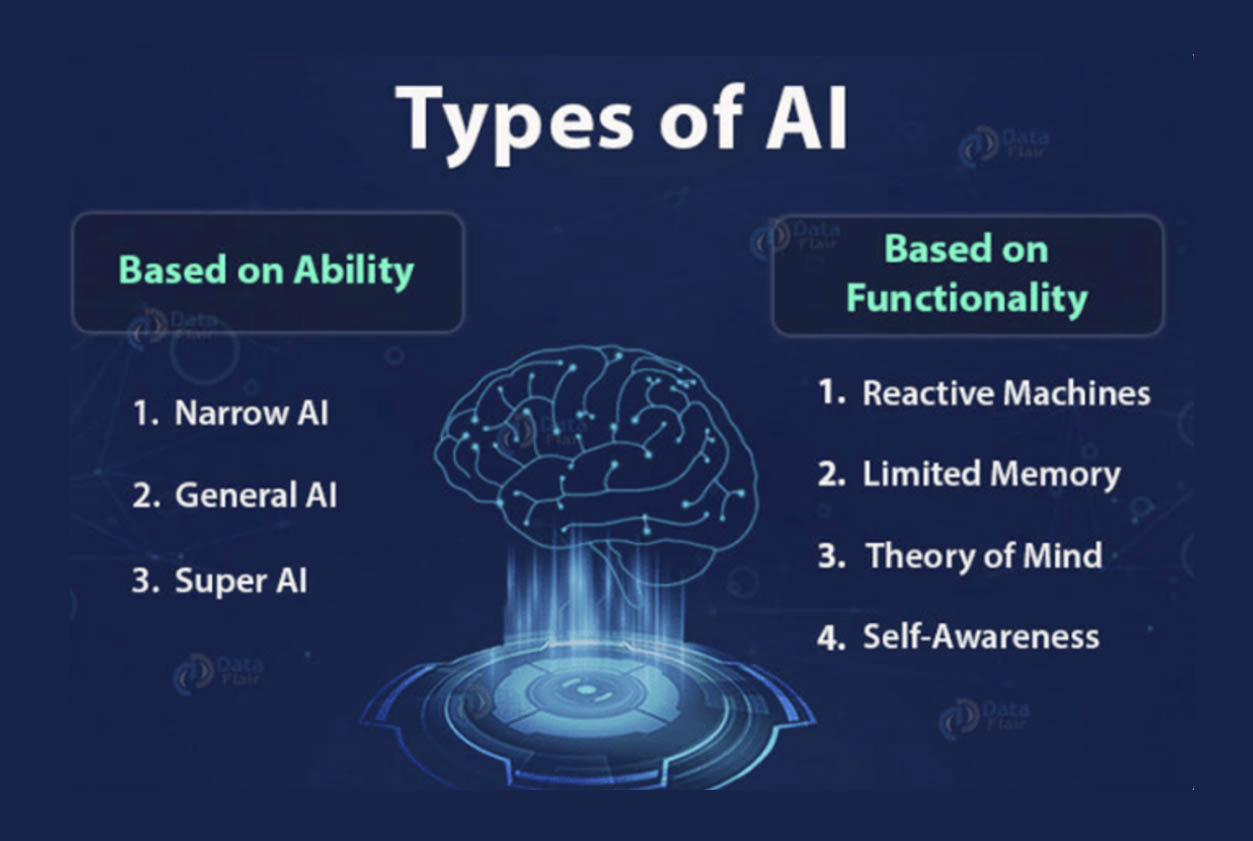
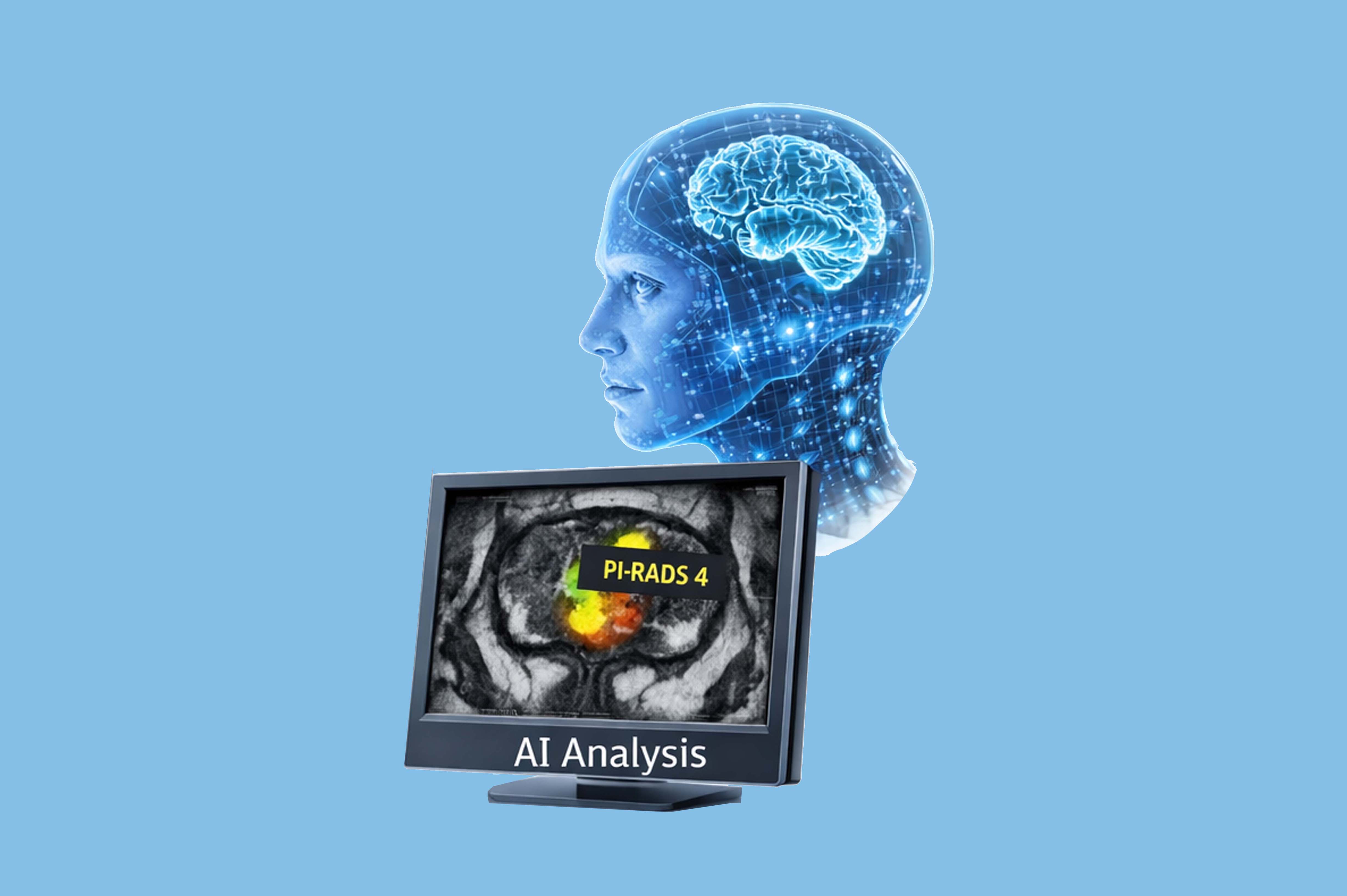
When people hear "artificial intelligence," they often think of chatbots, robots, or computers that think like humans. But the AI used in prostate MRI analysis is something very different. It belongs to a category called Narrow AI, a specialized type of artificial intelligence designed to perform a specific task exceptionally well. In this article, we'll explore the three major types of AI based on ability and explain where prostate MRI analysis fits, helping you better understand the technology increasingly being used in modern medical imaging. AI can also be described by how it functions, so we’ll also look at four common functional categories of AI.
Nearly every AI system currently used in healthcare falls into a category called Narrow AI. Narrow AI is designed to perform a specific task. It doesn't think like a person, understand medicine, or reason like a physician. Instead, it becomes highly skilled at one particular job.
Examples include:
A helpful analogy is a bloodhound. A bloodhound isn't more knowledgeable than a human, but it can detect scents far better than humans can.
Likewise, Narrow AI isn't smarter than a physician. It is simply designed to recognize specific patterns exceptionally well. This is the type of AI most commonly used in medical imaging today.
General AI refers to a theoretical system capable of performing virtually any intellectual task a human can perform.
A General AI would be able to:
For example, a General AI might review a prostate MRI, discuss treatment options, interpret blood tests, explain risks to a patient, and answer follow-up questions, all without being specifically programmed for each task.
Despite what many headlines suggest, General AI does not currently exist in healthcare. The AI systems used today are highly specialized tools rather than independent thinkers.
The next category is called Super AI. This refers to a hypothetical system that exceeds human intelligence across nearly every area.
A Super AI would theoretically outperform the best physicians, scientists, engineers, and researchers. While this idea receives significant attention in movies and media, it remains speculative.
There are currently no Super AI systems used in medicine. For patients evaluating medical imaging technology, this distinction is important. The AI used in prostate MRI analysis is not an all-knowing machine making independent decisions. It is a specialized tool designed to analyze specific image patterns.
Another way AI is classified is by functionality. The simplest form is called Reactive AI.
Reactive AI responds to information directly in front of it. It does not learn from previous experiences or build knowledge over time. It's more like a calculator. A calculator performs calculations accurately, but it doesn't learn from previous calculations. Some early healthcare software functioned similarly. Programs followed predefined rules and generated outputs based on those rules.
These systems were useful but limited because they could not improve their performance through experience.
Most modern medical AI falls into a category known as Limited Memory AI. This is where things become particularly relevant for prostate MRI analysis.
Limited Memory AI learns from previous examples. Researchers train these systems using large collections of medical images where the outcomes are already known. For example, an AI system may review thousands of prostate MRI scans along with biopsy results, pathology findings, and physician annotations. Over time, the system begins identifying recurring patterns associated with significant cancer.
In many ways, this process resembles medical training. A physician becomes more experienced after reviewing thousands of cases. Similarly, AI becomes more capable after learning from large numbers of examples.
This ability to learn from prior data is one of the reasons AI has attracted significant interest in medical imaging.
Theory of Mind AI: Understanding Human Intentions
The next category is known as Theory of Mind AI. This refers to systems capable of understanding thoughts, emotions, beliefs, and intentions.
Imagine an AI that could recognize:
While researchers are actively exploring this area, healthcare AI has not reached this level. Current medical imaging AI analyzes data.
It does not understand emotions.
The final category is Self-Aware AI. This would involve a machine possessing awareness of itself and its own existence.
While often discussed in science fiction, no such systems currently exist. Today's healthcare AI is not conscious. It does not think.
It does not have opinions. It performs mathematical analysis on data.
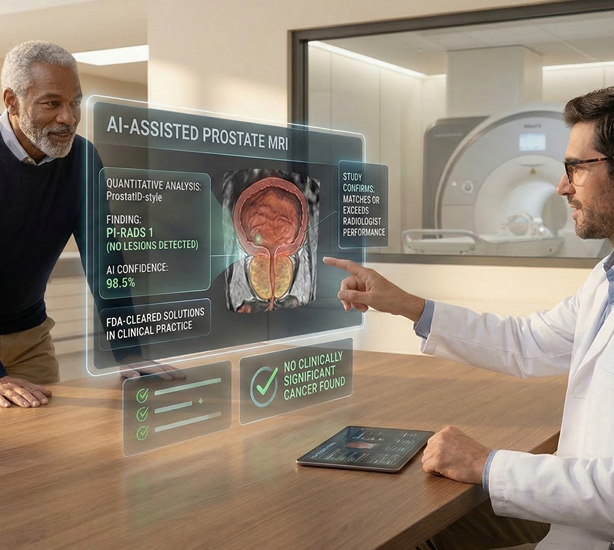
When patients hear that AI is being used to analyze a prostate MRI, they often imagine a futuristic machine independently diagnosing cancer. That's not what's happening.
The technology used today is typically Narrow AI operating as Limited Memory AI.
In simple terms:
1. It has learned from large numbers of previous cases and is designed to recognize patterns that may deserve attention.
2. The goal isn't to replace physicians.
3. The goal is to provide another layer of analysis that can help extract more information from the images already contained within an MRI scan.
For patients facing important decisions about biopsies, active surveillance, surgery, or radiation, understanding the type of AI being used can help separate science fiction from reality and provide a clearer picture of how these technologies are contributing to modern prostate cancer care.
.svg)