September is Prostate Cancer Awareness Month.
Learn the facts and understand your options.
Learn the facts and understand your options.


For many men, one of the first questions after a prostate cancer diagnosis is practical: Will treatment change my sex life or my ability to control my bladder?
These concerns are part of the medical decision. Guidelines in the United States, Europe and the UK emphasize discussing urinary, sexual and other quality-of-life effects when treatment options are considered.
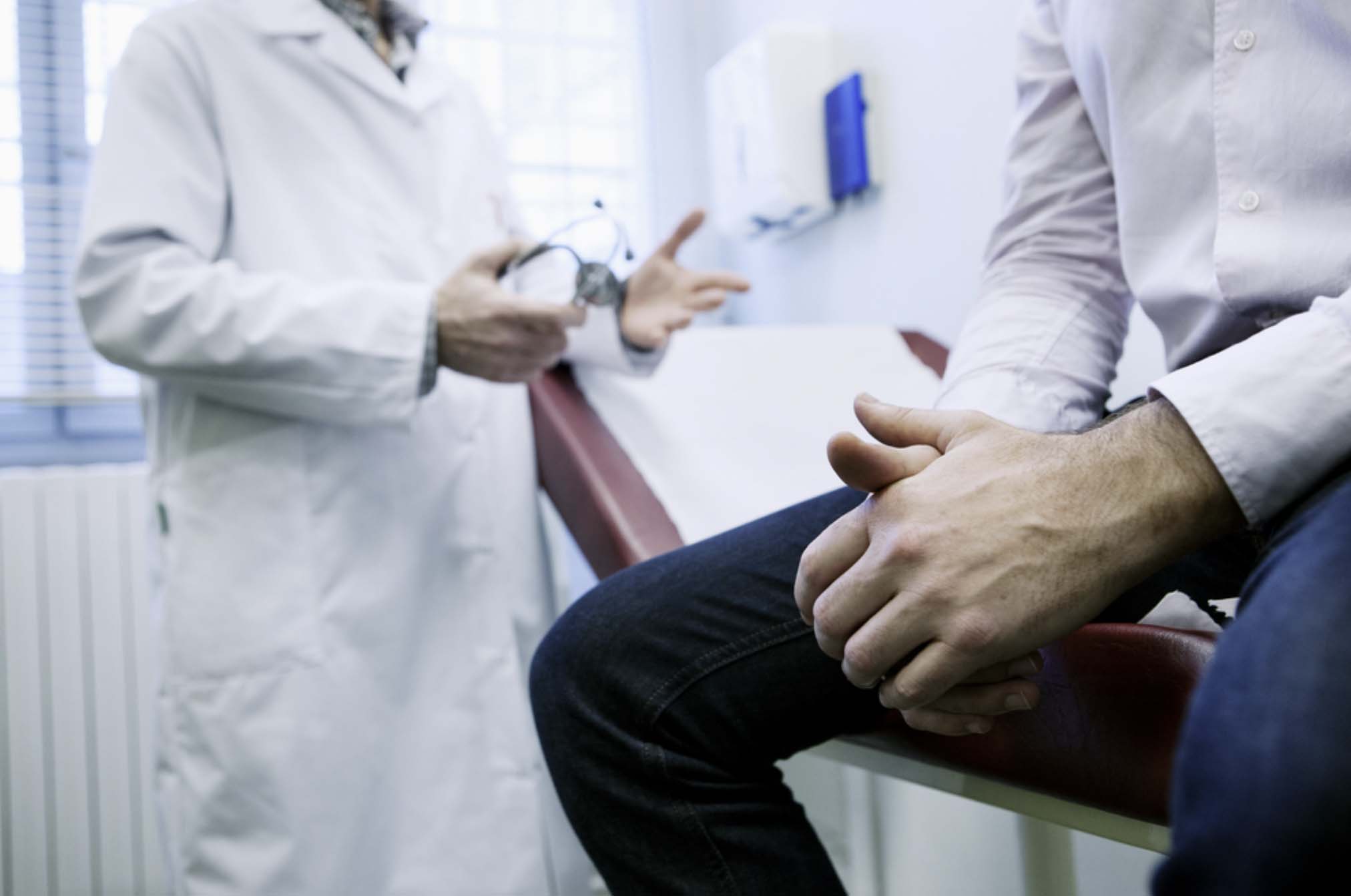
Dr. Eric Walser, former Professor and Chairman of Radiology at the University of Texas and a specialist in image-guided prostate treatment, puts it this way: “For men my age, 50s and 60s, it’s really important that they maintain their sexual status.”
A diagnosis also does not automatically mean immediate treatment.
The prostate sits just below the bladder and surrounds the urethra, the tube that carries urine out of the body. Nerves involved in erections run along its sides, and muscles involved in urinary control sit nearby.
Because these structures are close together, treatment can affect sexual or urinary function. Whether nerve-sparing surgery may be appropriate, for instance, depends partly on the cancer’s location and on whether there is concern that disease extends beyond the prostate.
The numbers below describe groups of patients and cannot predict what will happen to one individual.
Radical prostatectomy. Erectile function usually declines substantially after surgery. Some men recover over time, sometimes with medication, devices or rehabilitation. Urinary leakage is common soon after surgery and improves for many men, although some continue to use pads long term.
NICE cites data in which moderate or severe erectile problems at six months were reported by about 66 in 100 men offered prostatectomy, 48 in 100 offered radiotherapy and 29 in 100 offered active surveillance. In the ProtecT trial, pad use for urinary leakage between years 7 and 12 affected about 18% to 24% of the prostatectomy group, compared with 9% to 11% on active monitoring and 3% to 8% after radiotherapy. ProtecT used active monitoring rather than today’s MRI-led surveillance protocols, and many men originally assigned to monitoring later received radical treatment.
Radiation therapy. Erectile function tends to decline more gradually after radiation. Urinary continence is often better preserved than after surgery, although urinary irritation and bowel symptoms can occur. In ProtecT, fecal leakage affected 12% of the radiotherapy group by year 12, against 6% in the other groups.
Androgen deprivation therapy (ADT). ADT lowers the effect of testosterone and is used in some higher-risk, recurrent or metastatic cancers, often alongside other treatment. It can affect libido, erections, energy, mood, muscle mass and bone health.
Focal therapy. Focal approaches treat a selected area of the prostate rather than the whole gland, aiming to reduce damage to surrounding structures. Functional results in selected patients can be encouraging, though long-term comparative evidence is still developing. The 2026 AUA/ASTRO guideline considers focal and whole-gland ablation investigational for low- and intermediate-risk disease, and current EAU guidance recommends it only within clinical trials or prospective registries.
Active surveillance. For selected men with lower-risk disease, surveillance may delay or avoid the sexual and urinary effects of radical treatment. It still involves PSA testing, MRI and sometimes repeat biopsy, and some men later move to treatment.
Two men with similar diagnoses can have different treatment options and different chances of side effects.
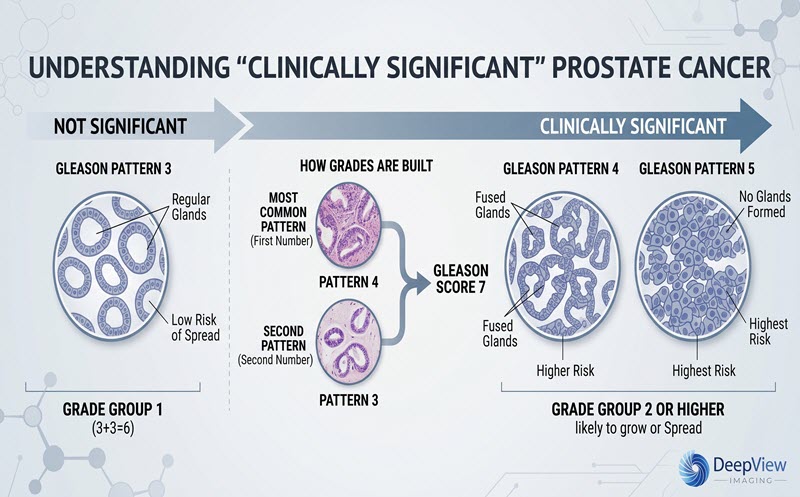
Factors that shape the discussion include your age, your erectile and urinary function before treatment, PSA and PSA density, biopsy Grade Group, lesion size and location, whether cancer appears confined to the prostate, other medical conditions and your preferences.
Similar numbers can mean different things in different patients, and baseline sexual and urinary function is particularly important when estimating side-effect risk.
“Almost all of these men are married. They have a partner, and they’re active,” Dr. Walser observes.
Sexual side effects can affect a relationship as well as the person receiving treatment. In a study of 370 spouses or partners of prostate cancer survivors, more than 75% reported a decline in the quality of their sex life after treatment. Research on couples has also found that partners sometimes report levels of anxiety and distress as high as or higher than the men themselves, while feeling they have little standing to raise it.
The same literature suggests that avoiding the subject altogether is associated with greater relationship distress, while open discussion may support adjustment for both people. If you both feel comfortable with it, bringing your partner to a treatment discussion may help. NICE recommends access to specialist erectile-dysfunction and continence services after radical treatment.
“If you’re incontinent of urine, if you leak urine, you’re dealing with that every hour of every day, the rest of your life,” Dr. Walser says.
When a possible side effect is that persistent, the information behind the decision is worth understanding clearly.
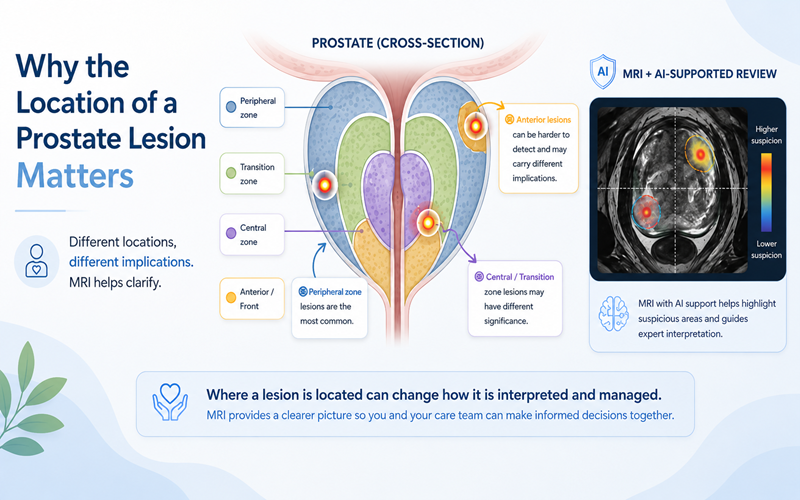
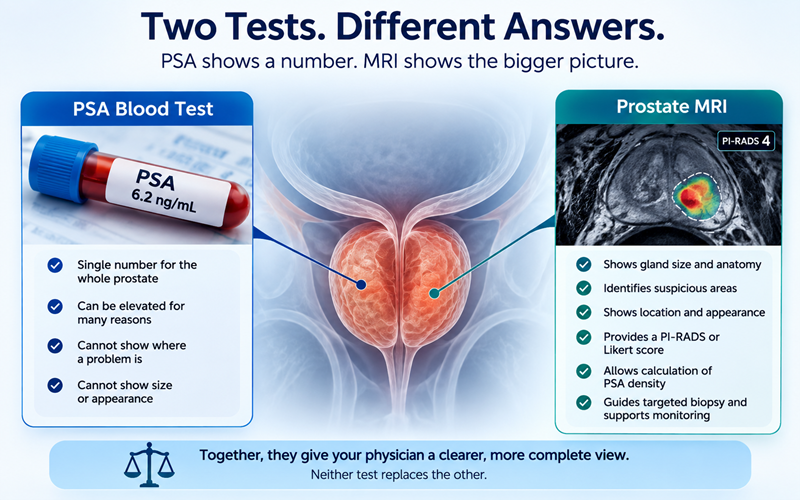
A prostate MRI may show where a suspicious lesion sits, its approximate size, its relationship to nearby structures and whether there are imaging signs of extension beyond the prostate. It also helps guide targeted biopsy and can support active-surveillance decisions.
MRI-directed pathways can reduce unnecessary biopsy and reduce detection of clinically insignificant cancers, which matters here: treating cancer that never needed treating is the most avoidable source of side effects. In the PRECISION trial, an MRI-first pathway allowed some men to avoid biopsy while detecting more clinically significant cancer and fewer low-grade cancers. GÖTEBORG-2 found substantially less detection of insignificant cancer in a screening setting when biopsy was restricted by MRI findings.
MRI cannot decide by itself whether someone needs treatment. Diagnosis generally depends on biopsy and pathology, and the decision also rests on PSA, Grade Group, stage, age, health and your preferences. A negative or reassuring MRI lowers risk, but it does not reduce the risk to zero, and a PI-RADS or Likert score describes how suspicious an area appears rather than confirming what it is.
MRI also has limits when assessing whether cancer extends beyond the prostate. Clear imaging signs of extraprostatic extension can be important for treatment planning, but MRI can miss small or microscopic extension, so a scan that does not show it cannot reliably rule it out.
Prostate MRI is interpreted by radiologists, and readers can differ in how they assign suspicion scores, measure prostate volume and characterize lesions.
A meta-analysis of PI-RADS v2.1 studies found substantial overall agreement, with reader experience explaining much of the variation. A nine-reader study found high agreement on identifying index lesions but only fair agreement on exact category assignment. A Swedish assessment of 43 radiologists also found meaningful variation in prostate-volume measurement, which feeds into PSA density.
In a 2026 University College London study, four radiologists re-read 251 scans originally scored Likert 4 or 5, recording how confident they felt and reaching consensus where they differed. In the highest-confidence group, all 69 men who went on to biopsy had Grade Group 2 or higher cancer. This retrospective, single-centre finding needs further validation before it changes practice. What stands out for patients is the method: four readers, careful review, and discussion of disagreements.
DeepView Imaging provides an AI-supported second analysis of a prostate MRI you have already had, using ProstatID, an FDA-cleared, CE-Marked and UKCA-Certified platform. It analyzes T2-weighted imaging, diffusion-weighted imaging and ADC maps, so it works with both biparametric and multiparametric scans, and it highlights suspicious regions, segments lesions and returns risk information you can discuss with your physician. This is an additional perspective on information already contained in the MRI. It does not replace your radiologist, urologist or treating physician, and it does not diagnose cancer.
Sexual function and bladder control are legitimate parts of a prostate cancer treatment decision. As Dr. Walser puts it, “what makes men satisfied with their decision is if they have the least impact on their active lifestyle.”
No single side-effect number applies to everyone. Baseline function, cancer risk, MRI and biopsy findings, overall health and treatment approach all matter, and MRI adds useful information without being able to diagnose cancer or predict an outcome by itself.
If you have had a prostate MRI and are weighing what comes next, it is reasonable to ask what the scan showed, how confident the reading was, and what else is shaping the recommendation.
This article is for educational purposes only and is not medical advice. Decisions about screening, biopsy, diagnosis, monitoring, or treatment should be made with your treating physician.
.svg)